MIACC hosts three new FoodTalk sessions dedicated to the history of food, social gastronomy, and gastrophysics
The coordination team of ESHTE’s Master’s Degree in Innovation in Culinary Arts and Sciences (MIACC) continued its FoodTalks series, organising three new sessions dedicated to exploring food as a historical, cultural, social, scientific and sensory phenomenon.
On 28 October, FoodTalks 61 and 62 took place, featuring two guest speakers whose presentations brought together different perspectives on the role of food in contemporary societies.
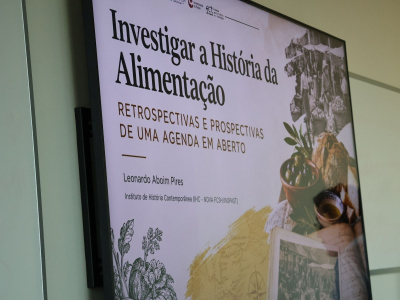
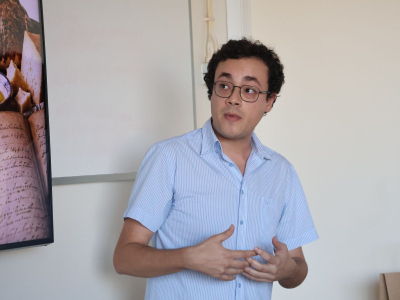
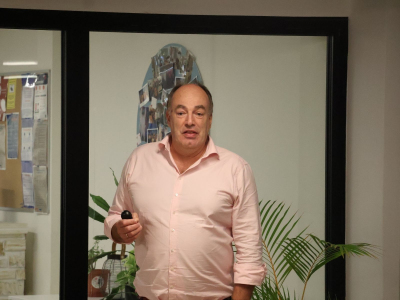
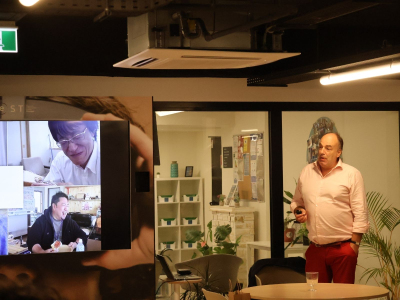
FoodTalk 61 featured Leonardo Aboim Pires, researcher at IHC — Institute of Contemporary History / NOVA FCSH, who delivered a presentation entitled “Researching Food History: Retrospectives and Prospects for an Open Research Agenda”. In his talk, the researcher explored food history as a field of study that goes beyond the biological dimension of eating, examining food as a social, economic, political, cultural and environmental phenomenon.
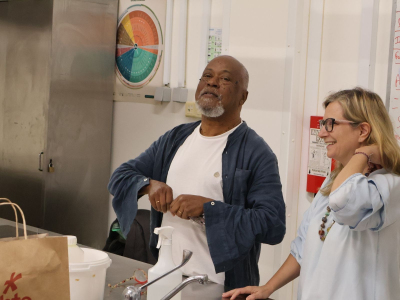
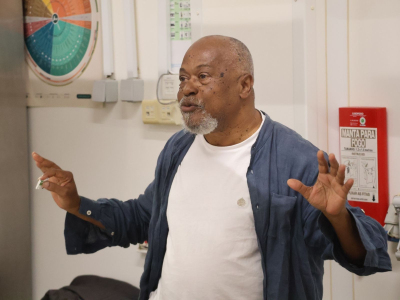
On the same day, FoodTalk 62 welcomed João Carlos Silva, an outstanding figure in the gastronomy and culture of São Tomé and Príncipe. Renowned for his work as a chef, visual artist, cultural promoter, entrepreneur, television presenter, and ambassador for São Toméan identity, João Carlos Silva delivered a presentation titled “Ancestral Social Cuisine”. The session highlighted gastronomy as a tool for heritage preservation, community empowerment and income generation, emphasising its potential as a driving force for local development and cultural appreciation.
On 2 November, FoodTalk 63 welcomed Charles Spence, researcher at the University of Oxford, who delivered a lecture entitled “Gastrophysics: The New Science of Eating”. The session focused on gastrophysics, an emerging scientific field at the intersection of gastronomy and psychophysics, which seeks to understand how multisensory perception shapes the eating experience.
Charles Spence presented gastrophysics as an approach that combines scientific knowledge of taste, smell, touch, sight and hearing with the excellence of culinary artistry, aiming to create more engaging and memorable gastronomic experiences. This field of research focuses on what happens in the mind of the person eating and may, in the future, help guide consumers towards more sustainable food choices that benefit both individuals and the planet.
Through these three sessions, MIACC continues to reinforce its commitment to promoting interdisciplinary knowledge by bringing together students, academic staff, and professionals from diverse fields of research and culinary practice. FoodTalks thus continues to establish itself as a key platform for debate, innovation and knowledge sharing in the field of culinary arts and sciences.