Postgraduate Studies in Cultural Tourism: Urban Reading of Eastern Lisbon
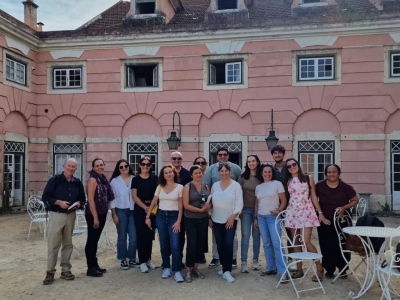
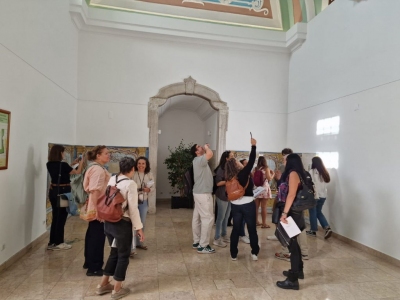
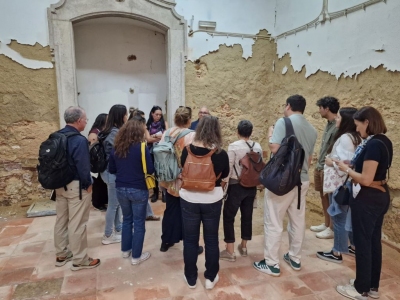
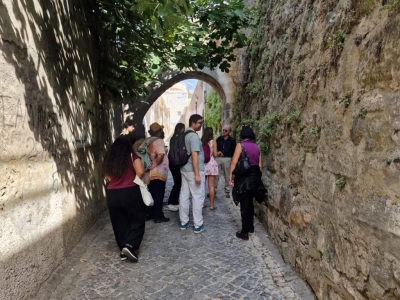
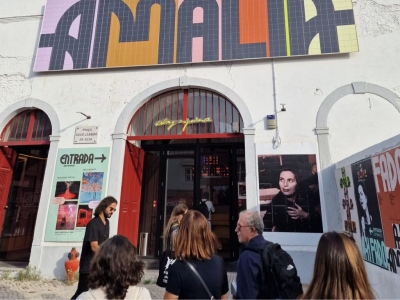
On October 18, 2025, the students of the Postgraduate Program in Cultural Tourism undertook a walking tour of Eastern Lisbon as part of the Immersive Laboratory course, accompanied by professors Fernando Completo and João Reis.
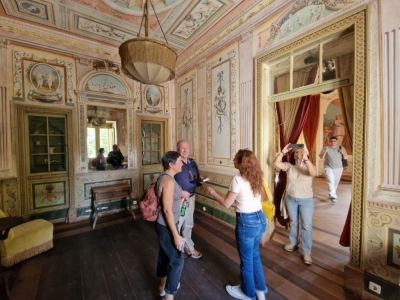
The route began at the National Tile Museum, housed in the former Convent of Madre de Deus, and continued to the former Convent of Xabregas, also known as the Convent of São Francisco de Xabregas, where a more extensive and detailed visit was conducted.
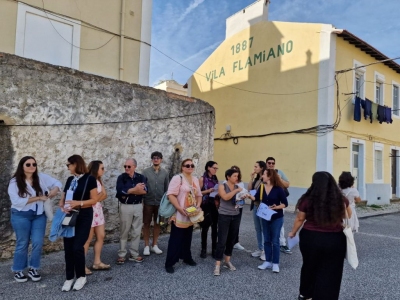
Between the two convents, the students also visited Vila Flamiano, a former workers' housing neighborhood associated with the Xabregas Cotton Factory Company, as well as the area of the former Military Maintenance facility. A highlight of this area was the visit to the Unicorn Factory Lisbon – Beato, an example of the reconversion of industrial heritage into a hub of innovation and technological development.
The itinerary also included the Grilo Palace, the Beato Convent, and the classified geomonument known as "O Barco" (The Boat), located on Rua Capitão Leitão. The visit concluded at the Mitra Palace, Poço do Bispo, and the former Braço de Prata Factory.
The study visit proved to be a particularly enriching experience, highlighting the historical, social, and functional complexity of Eastern Lisbon. Direct contact with convents, industrial heritage, working-class neighborhoods, and new innovation hubs allowed for an understanding of the dynamics of continuity and transformation of the territory, as well as the challenges associated with its reinterpretation within the context of cultural tourism. Urban reading thus emerged as an essential tool for the integrated valorization of heritage, the construction of coherent territorial narratives, and the development of more informed tourism practices.